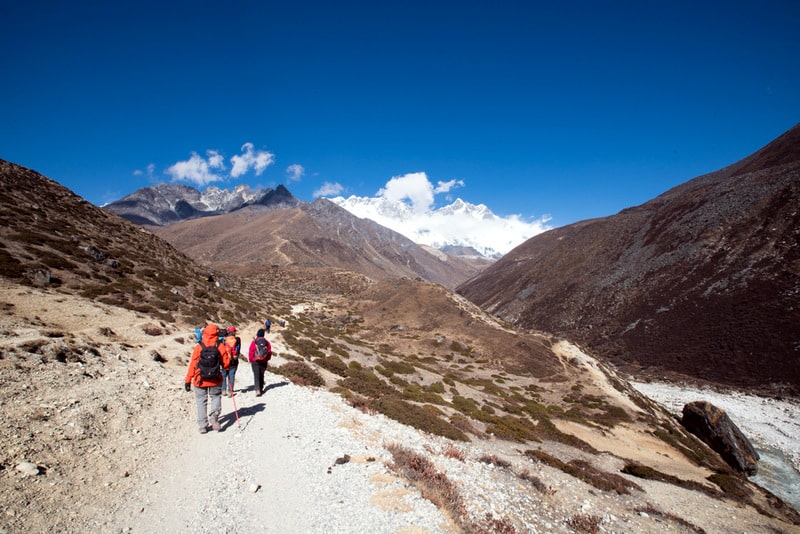
Mountain elevation changes what hunters need from an e-bike because a mountain route is rarely defined by distance alone. Sustained climbs increase battery demand, rough roads put more pressure on tires and suspension, and every major climb eventually creates a descent where braking and control become more important.
For hunters using an e-bike on remote access roads, elevation gain, road surface, equipment weight, temperature, and the difficulty of the return route should all be considered before advertised range or maximum speed.
A 15-mile mountain ride can be considerably more demanding than a longer ride across flat ground.
Why Does Elevation Gain Matter More Than Mileage?
Mileage tells only part of the story in the mountains.
A relatively short route with several thousand feet of climbing can require much more motor assistance than a longer, flatter road. Add hunting equipment, loose gravel, and repeated changes in gradient, and battery consumption can rise further.
This is why hunters should check the elevation profile before estimating whether a battery has enough range.
The direction of the route matters as well. A long downhill section on the way into a hunting area may use relatively little assistance, but that same road becomes a sustained climb on the way back.
The best range plan should cover the entire round trip, not simply the easier half.
How Much Battery Reserve Is Useful on a Mountain Route?
Mountain riders should leave more reserve than they would on flat terrain.
Real-world battery use changes with climbing, rider weight, cargo, assistance level, road surface, wind, and temperature. Higher assistance can make a steep section easier, but using maximum support for long periods also consumes energy faster.
Hunters should therefore avoid planning a remote ride around the highest advertised range figure.
If a route is already close to the bike’s maximum listed range before elevation and gear are considered, the margin may be too small.
A useful approach is to test the bike on similar terrain while carrying a realistic load before relying on it deep in the backcountry.
Do Mountain Temperatures Change E-Bike Range?
They can.
Mountain conditions may change significantly between the trailhead and higher elevations. Early mornings and late-season trips can also expose a battery to colder temperatures than expected.
Cold conditions can temporarily reduce available lithium-ion battery performance, making battery reserve even more important on longer routes.
Weather also changes the ground beneath the bike.
Rain, freeze-thaw cycles, snowmelt, or recent storms can turn a straightforward dirt road into mud, loose rock, ruts, or washed-out sections. That increases rolling resistance and can make both climbing and descending more demanding.
For mountain riding, battery planning and route-condition planning are closely connected.
Why Are Fat Tires Useful on Rough Mountain Access Roads?
Mountain access roads often change surface several times during one ride.
A route might start on pavement, continue onto compact gravel, and eventually become loose dirt or a rocky forest road.
A fat tire electric bike can provide a more planted feel on loose surfaces because wider tires create a larger contact patch. That can help when traction becomes more important on gravel climbs or uneven access roads.
There is a trade-off.
Fat tires generally add weight and rolling resistance, so they are not automatically the right choice for every rider. Hunters using mostly smooth maintained roads may not need them, while riders regularly crossing gravel, loose dirt, and rough tracks have a stronger reason to accept the extra weight.
Terrain should justify the tire choice.
How Much Suspension Does a Mountain Hunting E-Bike Need?
Elevation itself does not require suspension. Rough roads do.
Repeated rocks, potholes, roots, washboard surfaces, and ruts can increase rider fatigue and make the bike more difficult to keep settled over longer distances.
A suspension fork helps reduce impacts at the front wheel. Full suspension adds movement at the rear, which can improve comfort when rough terrain continues for miles.
Hunters should still match suspension to the actual route rather than simply choosing the maximum amount available.
A maintained gravel road has different requirements from a broken forest access track.
Why Are Brakes Just as Important as the Motor?
Mountain riding has two very different halves: going up and coming back down.
A motor may dominate the conversation on the climb, but on a long descent, braking becomes one of the most important parts of the bike.
The brakes have to manage the combined weight of the bike, rider, and gear. Loose gravel, wet surfaces, and steeper grades can further reduce available traction.
That means hunters should consider braking and motor performance together.
A bike that climbs strongly but feels difficult to manage downhill is not a well-balanced mountain setup.
Before longer trips, check brake condition and allow more room for controlled slowing rather than relying on abrupt braking.
Does a Step-Through Frame Make Sense for Mountain Hunting?
Yes, particularly when a route involves frequent stops.
A step through electric bike lowers the height riders need to clear when mounting or dismounting. That can be useful when stopping to check a map, opening gates, walking around obstacles, or repeatedly getting off the bike during scouting.
Heavy boots, layered clothing, or equipment can also make swinging a leg over a conventional high top tube less convenient.
A step-through frame does not automatically mean a bike is limited to city riding. Its outdoor capability still depends on tires, suspension, brakes, battery, motor, and overall construction.
What Does a Step-Through Mountain Setup Look Like?
For riders comparing a hunting ebike for mountain access, the most useful setup is one that balances climbing assistance, battery reserve, traction, braking, and ease of mounting rather than focusing on motor output alone.
A step-through frame can also be practical when the route involves frequent stops, gates, gear checks, or sections where the rider needs to dismount.
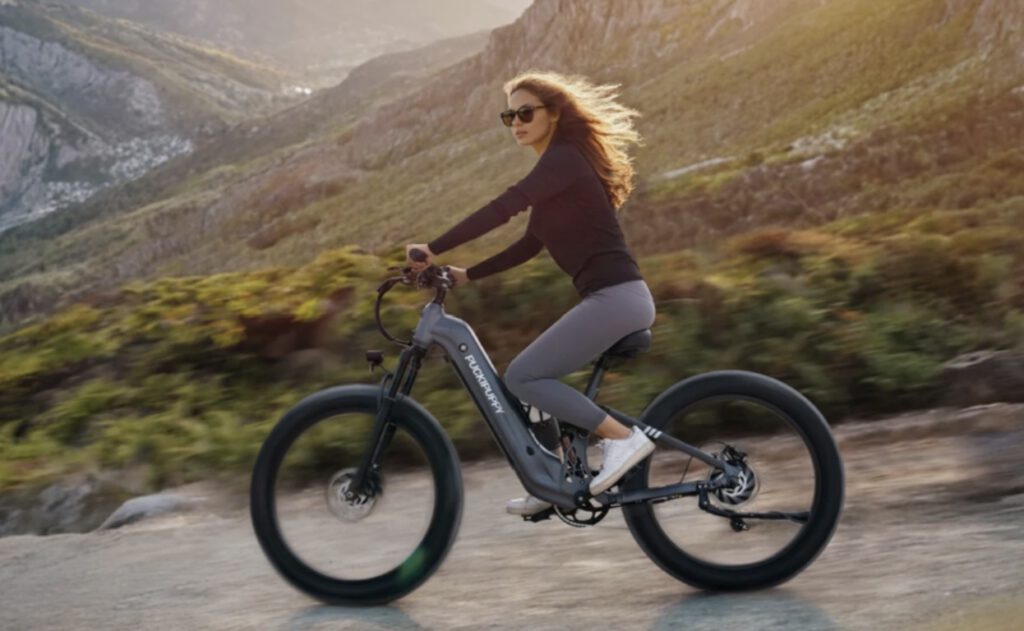
The Puckipuppy Boxer ST is one example of a step-through model configured for mixed outdoor terrain.
It uses a removable 48V 20Ah battery with a manufacturer-listed range of 40–80 miles, paired with a 750W motor that reaches 960W peak output. Puckipuppy lists throttle speed at up to 20 mph and pedal assistance at up to 28 mph.
For rougher routes, the Boxer ST uses 26 × 4-inch fat tires, a 130mm adjustable front suspension fork, rear suspension, and hydraulic disc brakes. Its maximum load capacity is listed at 400 pounds.
The step-through frame has a 16.3-inch standover height, which can make frequent mounting and dismounting easier during stop-heavy outdoor rides. Puckipuppy also specifically positions the Boxer ST for hunting and mixed surfaces such as gravel roads, trails, and campground routes.
There is an important trade-off: the bike weighs 84.6 pounds.
That matters in mountain country. An 84-pound bike may feel manageable while the motor is assisting, but it becomes much harder to deal with if the route includes a fallen tree, locked gate, washed-out road, or section that has to be pushed.
That is why bike weight should be considered alongside climbing power.
How Does Hunting Gear Affect Mountain Performance?
Gear changes more than payload.
Water, clothing, packs, optics, racks, and other equipment add total weight. More weight can increase battery use during climbs and create more momentum on descents.
It can also change handling.
Rear-mounted cargo may make the bike feel different through turns or on loose ground. Individual racks and bags can also have lower load limits than the bike itself.
Before a remote trip, hunters should test the bike with a realistic load on familiar hills.
An unloaded test ride on level pavement says very little about how the same bike will behave when climbing gravel with additional equipment.
Is a Bigger Motor Always Better at High Elevation?
Not necessarily.
Stronger assistance can help on sustained climbs, but motor output cannot compensate for poor traction, insufficient battery reserve, weak braking, or a bike that is too difficult to control.
On loose mountain surfaces, the ability to apply power smoothly can be more useful than simply having the highest output number.
The best mountain setup works as a system:
motor assistance helps with climbing, battery capacity provides reserve, tires maintain traction, suspension manages rough surfaces, and brakes control the descent.
No single specification replaces the others.
Should Hunters Plan for Sections They Cannot Ride?
Yes.
Remote mountain roads can change quickly. A route that appears rideable on a map may contain gates, fallen trees, erosion, deep mud, or sections where walking becomes safer than riding.
Hunters should consider how manageable the bike will be without motor assistance.
That is especially important with heavier fat-tire models.
Before leaving, check route conditions and current access rules. Public land, wildlife areas, private property, forest roads, and recreational trails may all apply different rules to e-bikes.
Terrain capability does not automatically mean riding permission.
Elevation Changes the Entire E-Bike Decision
Mountain hunting routes place more demands on an e-bike than mileage alone suggests.
Climbing increases battery use. Changing temperatures can affect range planning. Loose roads increase the importance of tire traction, while repeated rough sections make suspension more valuable. Added hunting gear changes both climbing and braking, and every long ascent eventually creates a descent where control becomes critical.
That is why hunters should study the elevation profile before comparing bikes.
A good mountain hunting setup is not simply the bike with the largest motor or longest advertised range. It is one whose battery, tires, suspension, brakes, frame design, weight, and load capacity still make sense when the route becomes steep and remote.
For high-elevation access, choose an e-bike around the complete mountain route—not just the mileage between the trailhead and the destination.

#Himalayas & #Northeast
Cinephile, Misanthrope, Anti-selfie
Atlas Obscura/Mint/Discover India