
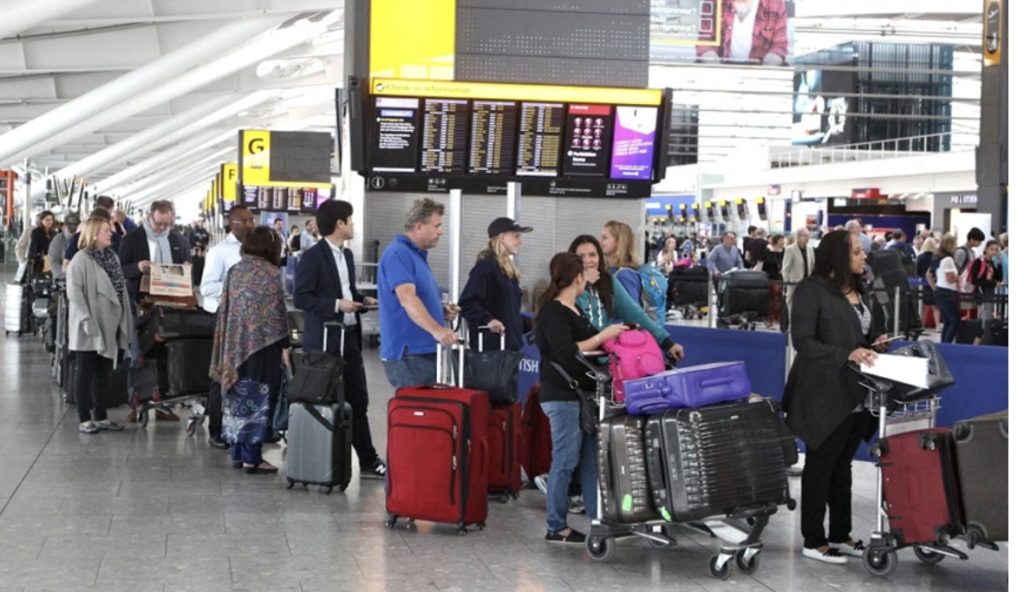
There is a specific quality to travel time that is different from time at home or time at a destination — a quality that most travellers waste by treating it as an obstacle between departure and arrival. The hours in an airport, the overnight train journey, the four-hour bus ride through landscapes you did not plan to stop in — these are hours that belong entirely to you in a way that scheduled destination time rarely does. No one is expecting anything of you. The agenda is suspended. The usual claims on your attention — work, household, social obligations — are genuinely unreachable. This suspended state is either an experience of boredom and impatience or an experience of unusual freedom, and the difference between these two experiences is almost entirely determined by how deliberately you approach the time rather than by how long it lasts.
The Psychology of Transit Time and Why It Feels Different
What the In-Between State Actually Provides
Transit time has a specific psychological character that distinguishes it from both active travel at a destination and ordinary life at home. Psychologists who study vacation experience and psychological restoration use the concept of “detachment” — the mental separation from normal roles, obligations, and concerns that is necessary for genuine recovery and restoration. Transit time produces detachment conditions more reliably than most deliberately planned relaxation experiences, because the physical separation from home and work environments removes the ambient cues that trigger normal-life thinking in ways that sitting at home trying to relax cannot achieve.
This detachment is the condition in which certain types of thinking and experience become more accessible. Long transit stretches are disproportionately reported as the moments when travellers have their most significant realisations about their lives, make their most important decisions, produce their most creative thinking, and have their most vivid experiences of present-moment awareness. This is not coincidental — it reflects the specific psychological conditions that detachment creates: reduced self-monitoring, reduced goal-directed cognitive activity, and the activation of the reflective thinking modes that the brain defaults to when it is not occupied with the demands of normal life.
The practical challenge is that these conditions are easily destroyed by the same mistake travellers make most consistently: immediately filling transit time with the stimulation that removes the detachment rather than allowing it to be inhabited. The traveller who opens their work email on the airport wifi, who scrolls social media throughout a long train journey, or who listens to podcasts continuously during a bus ride is importing normal-life cognitive patterns into a transit context that would, if left unstimulated, produce the unusual psychological conditions that make transit time valuable. The stimulation is not wrong in itself — some transit time requires stimulation to be tolerable — but the automatic default to high-stimulation digital content, without deliberately choosing whether it serves the moment, is the habit that converts potentially rich transit time into ordinary digital time that happens to occur on a different seat.
Mobile entertainment platforms have developed a sophisticated understanding of transit conditions as a primary use case, and the products designed specifically for these conditions are meaningfully different from those designed for home use. The tamasha app instant games to play catalogue — short-session games that complete in under three minutes — is designed around exactly the transit session profile: entertainment that delivers a complete, satisfying experience within the attention window available between flight announcements, boarding calls, or departures, without requiring the extended uninterrupted engagement that home entertainment formats assume. For the transit moments when reflection is not the right mode — when the mental energy for contemplation is genuinely exhausted and light entertainment is what the moment calls for — this kind of deliberately short-session content serves the traveller better than the open-ended formats that will still be demanding attention when the bus arrives.
The Different Modes of Transit Time and What Each Calls For
Transit time is not uniform, and the mistake of treating it as a single category — either endure it or fill it — obscures the variety of psychological states that different transit contexts produce and the different uses each state is suited for.
The anticipatory transit — leaving home heading toward a destination you are excited about — tends to produce a high-energy, forward-looking mental state where planning, imagination, and preparation activities feel natural and satisfying. This is the transit time most productively used for reading about the destination, thinking through the experiences you most want to have and how to create them, or doing the kind of creative and enthusiastic work that is difficult to access when you are obligated to be productive and that flows easily when you are genuinely excited about what lies ahead.
The return transit — heading home from a destination, with the experiences of the trip still fresh — produces a retrospective, reflective mental state that is unusually well-suited for journaling, memory consolidation, and the kind of meaning-making thinking that helps integrate travel experiences rather than leaving them as a disconnected set of sensory memories that fade quickly. Travellers who use return transit for deliberate reflection on what they experienced — not formal journaling but genuine thinking about what moved them, surprised them, challenged them, or changed their sense of what is possible — report more durable integration of travel experiences into their broader sense of themselves than those who spend the same hours watching films or sleeping.
The transit-between-destinations — moving from one place in a journey to another, already inside the travel experience — produces a different state again: a present-moment openness that is neither the excitement of departure nor the nostalgia of return but a particular quality of attentiveness to the environment passing outside the window and the fellow travellers sharing the space. This is the transit time that slow travellers, specifically, describe as among the most memorable of the entire journey — not because anything dramatic happens but because the state of being between places, with no specific obligation or agenda, produces a quality of presence that is difficult to access in more structured circumstances.
Making Transit Time Deliberately Good
The Practices That Convert Dead Hours Into Rich Time
Travellers who consistently report that transit time is valuable rather than burdensome have developed specific practices that create the conditions for different types of transit experience, rather than defaulting to whatever is immediately available or habitual.
The physical preparation practice is the most underrated. Transit discomfort — uncomfortable seats, inadequate lighting, poor air quality in terminals — is the primary obstacle to the reflective and restorative uses of transit time, and the travellers who most reliably access those uses have made investments in physical comfort that allow the body to settle rather than distracting the mind. A good travel pillow, noise-cancelling headphones (used for silence or music rather than only for podcasts), sufficient water, and snacks that maintain stable energy rather than creating the sugar crashes that accompany airport food — these are not luxuries but functional investments in the transit experience that make all other approaches to the time more accessible.
The content preparation practice is the second specific practice. Having prepared in advance the reading, media, or reflection prompts that fit different transit scenarios means not having to make decisions about how to spend transit time from a starting position of boredom. A dedicated travel reading list — books selected specifically for the reading style that transit produces, which tends to be more open to narrative and less suited to technical or reference reading than home reading — should be populated before departure. A journaling prompt or two for return transit should be prepared. A selection of light entertainment for the moments when reflection is genuinely not available should be downloaded for offline use rather than discovered through airport wifi browsing.
The deliberate permission practice is the third, and for professional travellers often the most difficult. Giving yourself explicit permission to use transit time in ways that do not feel productive — to read a novel rather than industry reports, to look out of the window rather than review presentations, to sleep when tired rather than pushing through in pursuit of more completed tasks — requires the same kind of intentional decision-making as any other deliberate approach to time use. The professional who has not given themselves this permission defaults to the appearance of productivity in transit environments, which produces neither genuine productivity nor genuine rest but a fatiguing middle ground that leaves them less capable of both when the transit ends.
The characteristics of transit time practices that slow travellers most consistently report as transformative are:
- Protected reflection periods within longer transit stretches — specific periods where no content or communication is consumed and the mind is given permission to go wherever it goes without direction, which is the condition that produces the unexpected insights and clarity that transit time is disproportionately good at generating
- Physical environment enhancement that makes the transit space as comfortable as possible within the available constraints, which is not about eliminating the transit experience but about removing the physical discomfort that prevents the deeper uses of transit time from being accessible
- Intentional documentation of transit observations, thoughts, and experiences in some form — notes, photographs, voice memos — that creates a record of the in-between time as a record of the journey rather than as a gap between the parts of the journey worth recording
The numbered steps for developing a deliberate transit time practice as a regular traveller are as follows:
- Create a transit-specific content library before each significant journey — books, reading, music, and light entertainment that you have specifically selected for transit rather than importing your home digital consumption habits into the travel context
- Designate specific transit periods for specific modes — deciding in advance which portion of a long transit stretch will be used for reflection, which for active reading or work, which for rest, and which for light entertainment — which removes the in-the-moment decision that typically defaults to the most immediately available option regardless of whether it serves the moment
- Practice deliberate window time on every transit journey — a period of simply observing the environment passing outside, without headphones, without a phone, and without a specific thought agenda — which is the transit practice that slow travellers most consistently identify as producing the memorable moments that distinguish real travel from itinerary execution
Conclusion: The Journey Is Already the Destination
The slow travel philosophy’s most practical implication is the one that applies most directly to transit time: the journey is not a cost paid to access the destination, it is part of the experience being sought. A traveller who arrives at a destination having spent eight hours of transit time in a state of anxious impatience, digital distraction, and productive performance anxiety has used those eight hours poorly — not because they failed to relax but because they failed to inhabit the specific quality of experience that transit time makes available and that destination time does not. The traveller who arrives having spent the same eight hours in alternating modes of reflection, light reading, and present-moment observation has had a richer eight hours than most scheduled destination activities would have provided. The difference is not in what happened around them. It is in what they chose to do with the unusual psychological freedom that transit time reliably offers to those who know how to receive it.

#Himalayas & #Northeast
Cinephile, Misanthrope, Anti-selfie
Atlas Obscura/Mint/Discover India