If you’ve followed my footsteps at The Travelling Slacker, you know I have a complicated relationship with “pilgrimages.” Most of my life has been spent seeking the secular—the hidden architecture of the Himalayas, the forgotten dialects of the Northeast, and the silent high-altitude deserts where no one bothers to build a shrine. But Mount Kailash is different. It is the geographic and spiritual heart of the Trans-Himalayas, a massive pyramid of black rock that draws you in regardless of your faith.
For years, the logistical wall between India and Tibet felt insurmountable. Between the unpredictable weather of the Lipulekh Pass and the chaotic helicopter hops from Nepal, I waited for a route that offered both stability and a chance to truly see the plateau.
I finally found it. Last month, I traded the humid heat of Delhi for the crisp, thin air of the “Roof of the World.” I opted for the Indians to Kailash by Road from Lhasa itinerary organized by Tibet Horizon (the team behind tibettourism.com). It was a 15-day journey that proved, once and for all, that the long way is often the most rewarding.
The Paperwork Paradox: Why the Chengdu Route is the Secret for Indians
Let’s address the elephant in the room: the Tibet Travel Permit (TTP) and the Chinese Tourist Visa. For an Indian traveler, getting into Tibet can feel like trying to crack an enigma code.
I chose the Delhi–Chengdu–Lhasa transit, and here is why it was a logistical masterstroke:
- The Chengdu Buffer: Instead of stressing in a border town in Nepal, I spent two days in Chengdu. It’s a modern, vibrant city that acts as the perfect staging ground.
- The “Original” Permit: You cannot board a flight to Lhasa without the physical, original permit. Digital copies are useless. Tibet Horizon handled the entire application process seamlessly. When I checked into my hotel in Chengdu, my Original Tibet Travel Permit was waiting for me at the front desk. Holding that document—with its official red stamps—felt like the true start of the Yatra.
- Efficiency: Entering Tibet via a domestic flight from Chengdu is significantly more stable than the land borders, which can close due to landslides or political shifts at a moment’s notice.
Part I: The Slow Breath of Lhasa
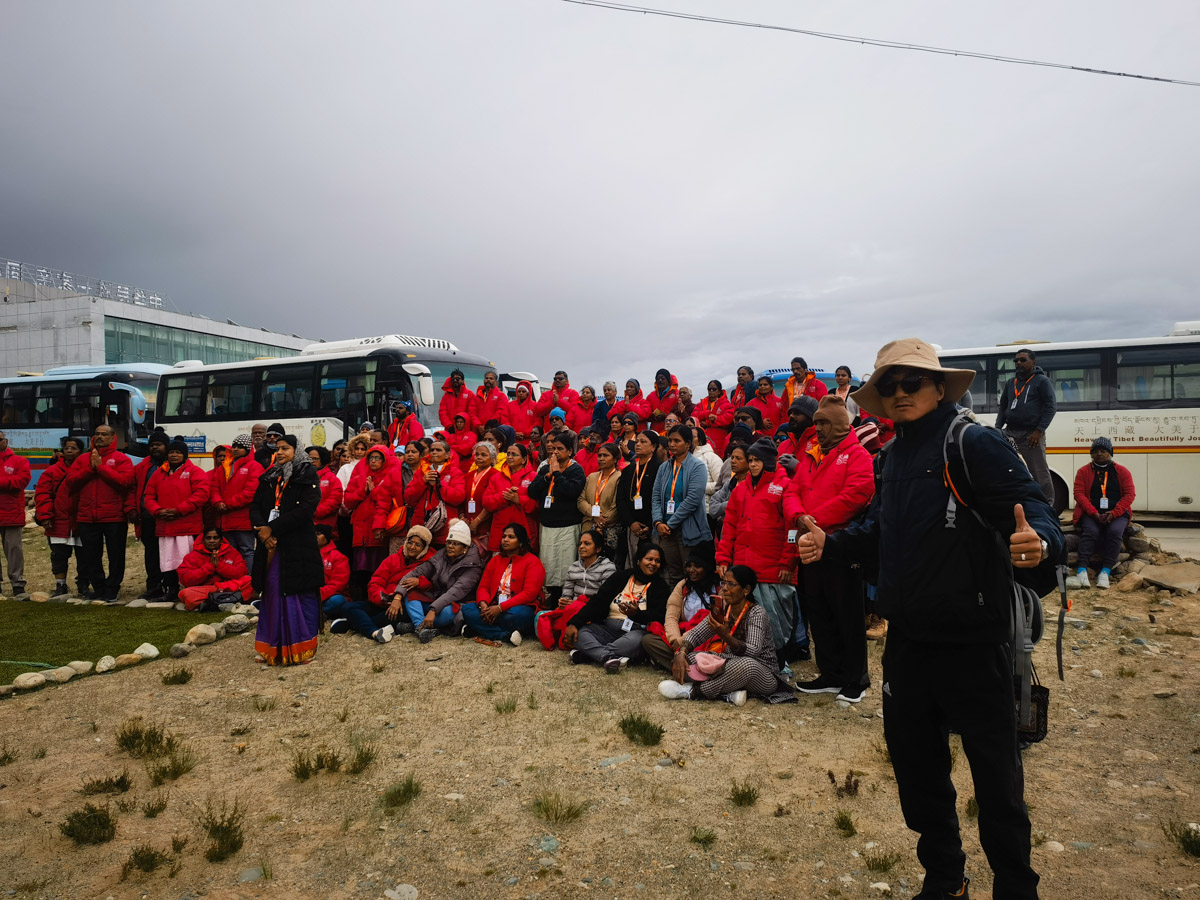
Landing at Lhasa (3,650m) is like stepping into a high-definition dream. The sky is a deeper shade of blue than anything we see in India. Our group was met by Mr. Karma (སྐར་མ་), our tour guide. He didn’t just hold a sign; he held a wealth of local knowledge that turned every street corner into a story.
We spent three days in Lhasa for acclimatization. This is where many Indian groups go wrong—they try to rush to the mountain. But Tibet Horizon understands the biology of the plateau. We paced ourselves, walking the Barkhor Circuit with thousands of pilgrims and standing in the shadow of the Potala Palace.
Our transportation was a revelation: a modern, spacious bus equipped with professional oxygen cylinders. In a place where a simple headache can turn into high-altitude pulmonary edema, having a team that monitors your blood oxygen levels daily isn’t just “service”—it’s survival.
Part II: 1,200 Kilometers of Himalayan Majesty
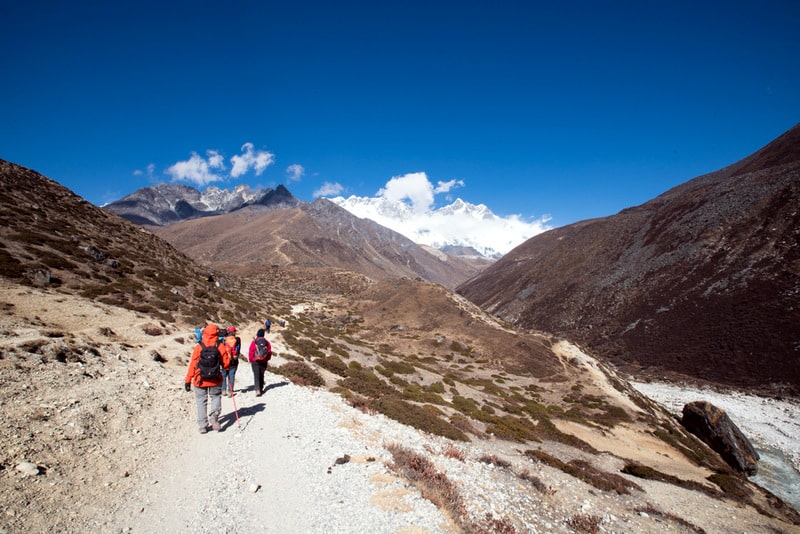
The drive from Lhasa to Western Tibet is an odyssey. We followed the Friendship Highway, a ribbon of perfect asphalt that cuts through the most rugged terrain on earth.
We stopped at the Tashilhunpo Monastery in Shigatse, the traditional seat of the Panchen Lama. Walking through its golden-roofed halls and standing before the 26-meter-high Maitreya Buddha statue was a lesson in scale and devotion. Leaving the city, we crossed high passes draped in prayer flags that roared in the wind. What struck me was the silence. Away from the bustle of the towns, the plateau opens up into a vast, rolling emptiness where yaks graze on golden grass and the peaks of the Himalayas stand like sentinels on the horizon.
Between the gilded halls of Shigatse and the first sight of the sacred lake, there is a stretch of road that tests a different kind of endurance—the mental one. As we climbed higher, crossing the 5,000-meter threshold repeatedly, the landscape became a minimalist masterpiece. The telephone poles vanished, replaced by the occasional flicker of a Tibetan antelope or a lone nomad’s tent. In this vastness, your inner monologue changes. The constant hum of Delhi’s traffic or the anxiety of a digital life begins to feel like a distant, irrelevant static.
This is the beauty of the Lhasa route; it’s a slow-motion immersion into the void. Tibet Horizon’s pace allowed for these moments of quiet observation. Whether it was stopping at a roadside tea house where the air was thick with the scent of dried yak dung fuel, or simply watching the play of light on the desolate peaks, I realized that the Yatra isn’t just about the physical trek around Kailash. It’s about the 1,200 kilometers of “nothingness” that prepares your mind. By the time the horizon finally broke to reveal the sapphire shimmer of Mansarovar, I wasn’t just a traveler with a camera; I was someone who had been hollowed out and made ready for the mountain. The transition was subtle, yet profound—a slow shedding of the skin before reaching the center of the world.
The Slacker’s Food Report: As an Indian traveler, food is always a concern. The Tibet Horizon kitchen crew traveled with us, and their ability to whip up hot, fresh dal, sabzi, and roti at 4,500 meters was nothing short of miraculous. There is nothing quite like eating a hot Indian meal while looking out at a glacier.
Part III: Mansarovar – The Mind-Born Lake
On day six, the landscape changed. The mountains pulled back, and there it was: Lake Mansarovar.
At 4,590 meters, it is the highest freshwater lake in the world. To Hindus, it was created in the mind of Lord Brahma. Standing on its shores, looking across the sapphire water toward the distant, white-capped dome of Kailash, I finally understood the pull of this place.
The team at Tibet Horizon arranged a quiet, respectful area for our group to perform puja and take a holy dip. They provided hot water and changing tents—small details that make a massive difference when the wind is biting and the water is near freezing. That night, the stars were so bright they looked like they were within arm’s reach.
Part IV: The 3-Day Kailash Kora
Then came the centerpiece of the Yatra: the 54km trek around Mount Kailash.
Day 1: Darchen to Dirapuk (20km): A long, steady walk through the Lha-chu Valley. When we reached Dirapuk, the North Face of Kailash suddenly loomed over us—a sheer, vertical wall of black rock and white ice. It was intimidating and beautiful all at once.
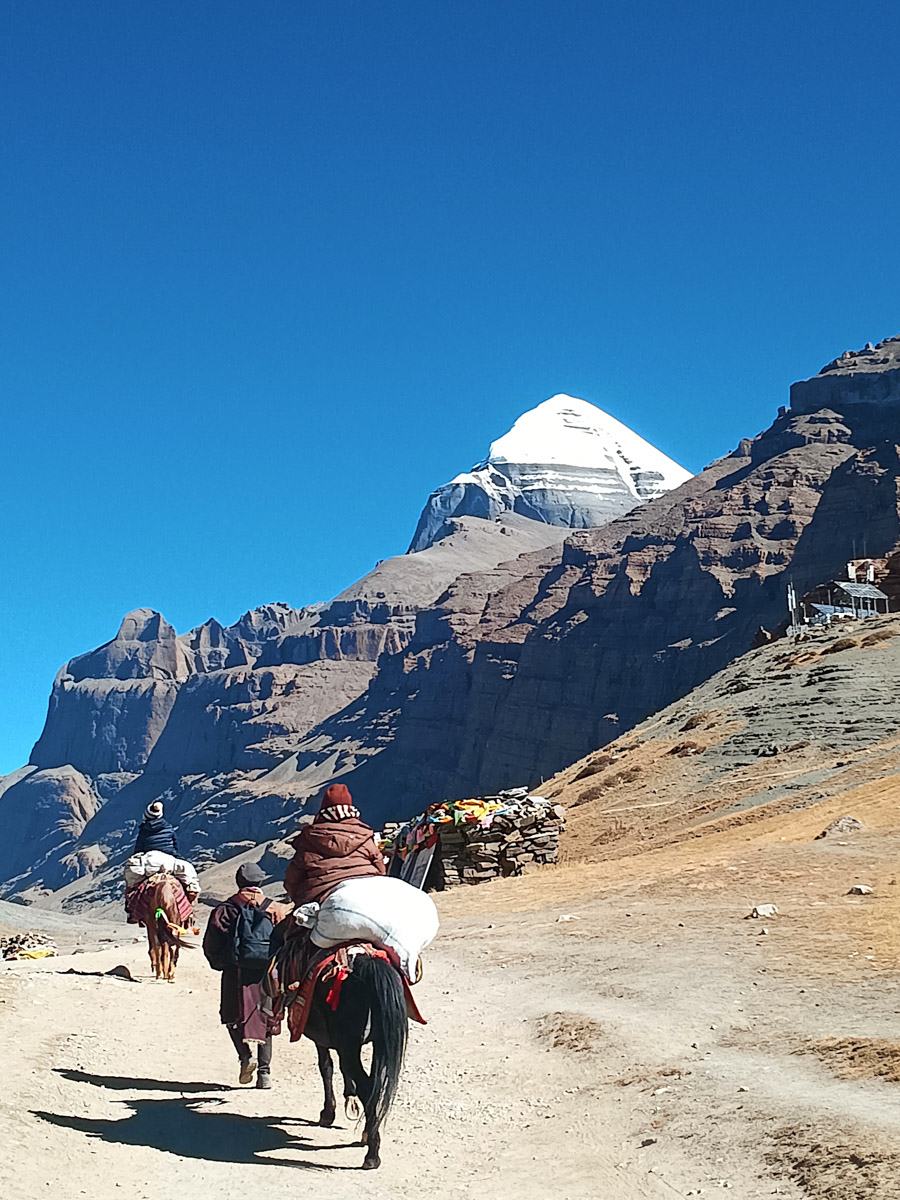
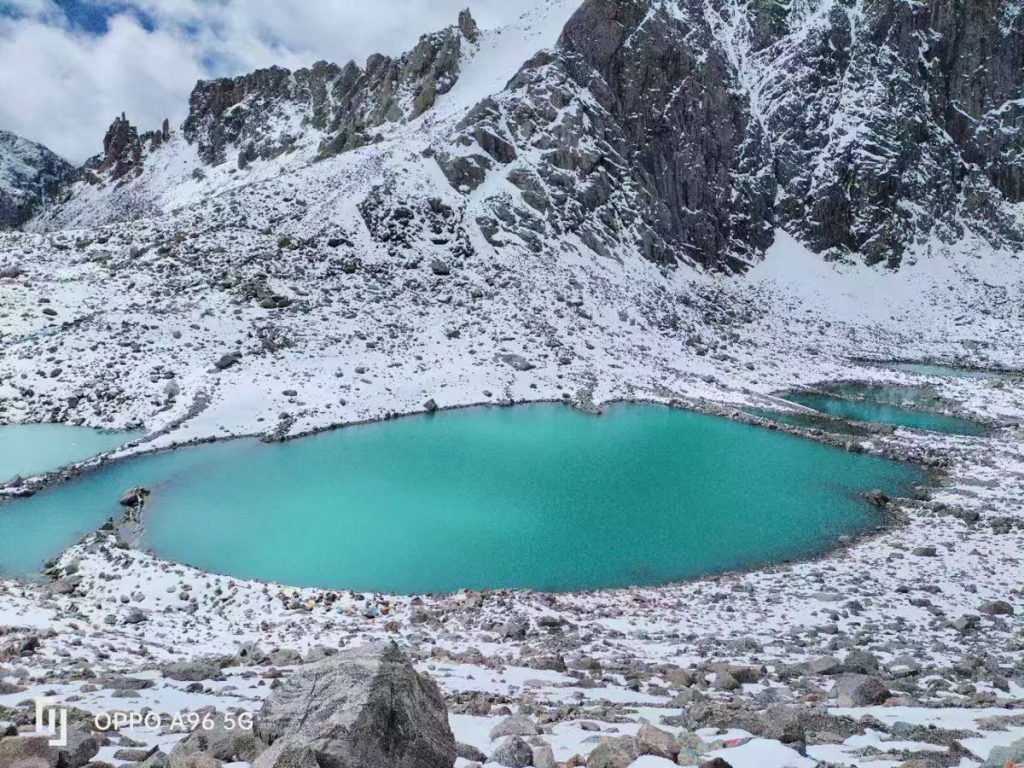
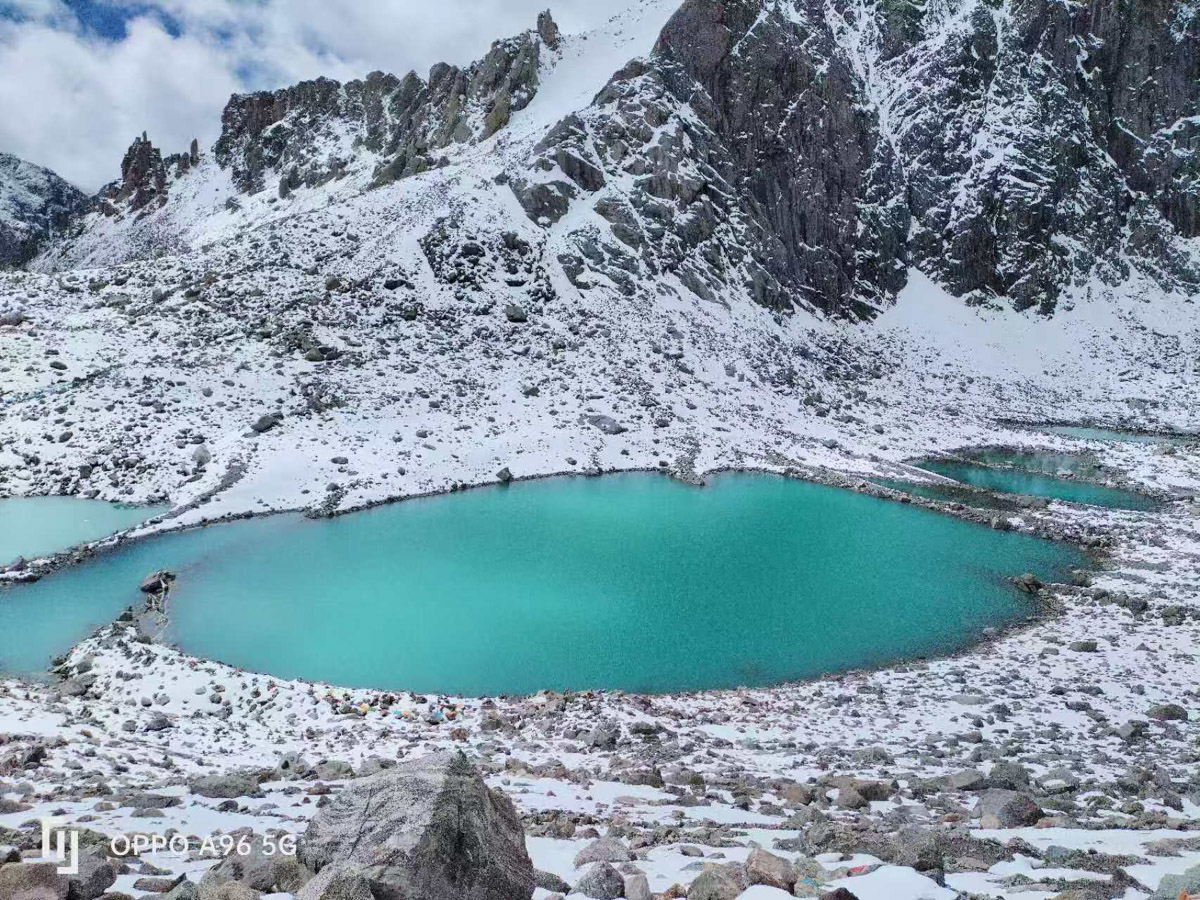
Day 2: The Dolma La Pass (24km): The “Day of Reckoning.” We climbed to 5,630 meters (18,471 feet). Every step was a battle for breath. The trail is a graveyard of old clothes and flags—offerings left by pilgrims. When I reached the summit of the pass, I felt a sense of relief that was almost physical. Just below lies Gauri Kund, a tiny, emerald-green lake nestled in the rocks.
Day 3: The Descent (10km): A gentle winding path back to Darchen. The intensity of the previous day had faded into a quiet, meditative rhythm.
Throughout the trek, our expert guide, Mr. Karma, was always there for us. He wasn’t just leading the way; he was monitoring our health, helping with gear, and ensuring that every member of the group—regardless of their pace—felt supported.
Why This is the Ultimate Route for Indians
I’ve spent a lifetime wandering the Himalayas, and I don’t say this lightly: the Lhasa route is the gold standard for the Kailash Yatra.
Acclimatization: Starting in Lhasa and driving West gives your body nearly a week to adjust. This is why our group had a 100% success rate on the Kora.
Infrastructure: The roads and guesthouses on the Lhasa side are significantly better than the alternatives.
The Brand: Tibet Horizon (tibettourism.com) understands the specific needs of Indian travelers—the food, the spiritual significance, and the logistical hurdles. They took the “search” out of the research.
Final Thoughts for the Indian Wanderer
The road to Kailash is not a vacation; it is a transformation. It strips away your ego and replaces it with a profound sense of awe. If you are sitting in India right now, looking at the map and wondering if you can do it—the answer is yes.
Don’t look for the fastest way. Look for the way that allows you to experience the soul of Tibet. Go through Lhasa. Spend the time. Let the mountain wait for you.
Planning your own journey to the center of the world?
Got questions about the Chengdu transit or the permit process? Drop a comment below. I’ve kept all my notes and would love to help another slacker make it to the top of the world.

#Himalayas & #Northeast
Cinephile, Misanthrope, Anti-selfie
Atlas Obscura/Mint/Discover India