Somewhere between La Fortuna and Monteverde, you roll down the window. That is when it hits you.
The heat from the volcanic lowlands is gone. What pours in now is cool, damp, strangely sweet. Moss and old rain. Your windscreen mists over within seconds. You are climbing into cloud.
I have driven through a lot of countries. Few of them shapeshift this fast. In Costa Rica, you can have breakfast beside a volcano, hike through a cloud forest by lunch and watch capuchin monkeys steal fruit from a beach bar by sundown. All on the same tank of fuel.
Ten days. That is all you need. But you need a car. And honestly? The unpaved roads are where the good stuff lives.
Why driving yourself is the only way to do this properly
Buses exist. They are cheap. They go almost everywhere. I will say that upfront because I know what some of you are thinking.
But here is the problem. That three-hour drive from San José to La Fortuna? On a bus, it can bleed into six. And you still miss everything in between. The roadside fruit stall where a grandmother slices pineapple that ruins all other pineapples for you. The hand-painted sign points to a finca selling coffee grown on the slope behind the house. The mirador nobody mentions because it does not have a name. None of that happens on a bus.
Renting a car flips the whole trip. Local agencies such as Jumbocar offer 4×4 vehicles at the airport, which matters more than you think. The road to Monteverde is half dirt, half potholes, and you will hate every second of it in a small sedan. With the right car, you stop caring. You turn off wherever the mood takes you.
One rule. Do not drive after dark. I mean it. Roads are narrow, unlit, shared with stray dogs and the occasional drunk pedestrian. Start early, arrive by mid-afternoon, and your blood pressure will thank you.
Day one to three: Arenal, volcanoes and hot rocks
Begin in La Fortuna. The drive from San José via Route 702 takes about three and a half hours. The road is paved, which is the last time I will use that sentence in this article.
La Fortuna the town is nothing special. Tourist restaurants, souvenir shops, adventure booking offices on every corner. But the volcano? The volcano delivers.
Arenal has not erupted since 2010. It does not need to. The shape alone, that perfect cone straight out of a cartoon, is enough. Hike to the La Fortuna Waterfall if your knees can handle 500 steps down and the same 500 back up. I underestimated those steps. My calves remembered it for three days.
In the evening, skip the expensive resort spas. Find the free thermal river where locals bring beer and kids. You sit in 40-degree water with stars overhead and it is absurd that nobody is charging for this.
Day four and five: into the cloud forest
La Fortuna to Monteverde is 120 kilometres. Three and a half hours. Let that sink in.
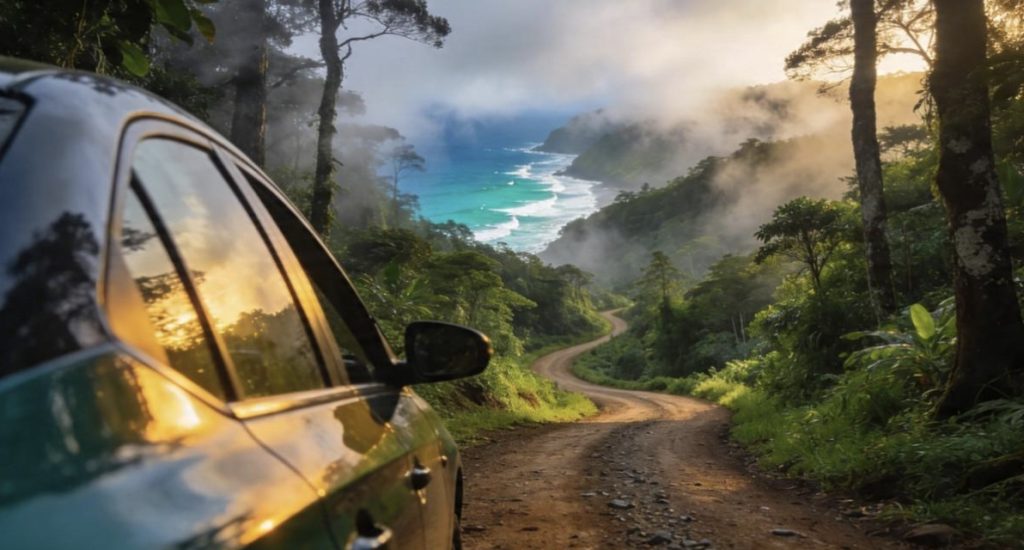
The first stretch along Lake Arenal is actually lovely. Windmills on the ridgelines, the volcano shrinking in your rear mirror, occasional glimpses of the lake through the trees. Then you leave the pavement.
The last 20 kilometres will test your rental car and your patience. It is unpaved, steep, full of switchbacks. Trucks come from the other direction with no warning. I stopped three times to let my knuckles recover.
And then Monteverde appears, shrouded in its permanent veil of mist, and you forgive the road entirely.
The Monteverde Cloud Forest Reserve shelters over 2,500 plant species, more than 400 types of birds and around 100 mammal species. Statistics I do not usually quote. But here they matter. This place is unreasonably alive. Guides will point out creatures you would walk past a hundred times. A resplendent quetzal, all emerald and crimson, perched three metres above your head. A tarantula the size of a hand, asleep in a tree hollow. Leaf-cutter ants carrying green confetti along branches.
Go with a guide. Seriously. Do not try this solo.
The hanging bridges at Selvatura are the other must. Six suspension bridges strung through the canopy. You walk at the height of the treetops. Below you, nothing but green. Above you, nothing but fog. It feels like trespassing in someone else’s world.
Day six to eight: dropping into the Pacific
Four hours south from Monteverde, the air changes again. Humidity rises. The vegetation loosens. You pass Jacó, Costa Rica’s best-known surf town. Not my favourite place, frankly. Loud, overbuilt, full of bars with English menus. But the ceviche at a roadside soda outside town was some of the best I had anywhere.
Keep driving.
Manuel Antonio is the smallest national park in the country. Also the most visited. The government capped daily entries a few years back and it shows. Wildlife has returned. On my first morning walk I saw three sloths, a family of capuchins, a coati nosing through leaves and a pair of toucans working through a fruiting tree. All before 9 am.
Buy your park tickets online before you go. They sell out. I learned this the hard way in 2023 when I had to wait until the afternoon slot.
The beaches inside the park are what postcards are made of. White sand. Warm water. A jungle backdrop. Just keep your bag zipped. Those monkeys have figured out how tourists work.
What the guidebooks leave out
Every Costa Rica itinerary hits the same three targets. Arenal, Monteverde, Manuel Antonio. All incredible. I am not here to argue.
But.
The crocodile bridge near Tárcoles is free. You pull over on the Costanera highway, walk to the railing, and there are 30-odd American crocodiles sunbathing in the river. Some of them two metres long. No entry fee, no tour guide, no booking. Just prehistoric reptiles, a bridge and you.
The waterfall near Bijagua, the one with no name on Google Maps, where I followed a handwritten sign and a local kid who wanted to practice his English. Twenty minutes of muddy trail. Then a 30-metre cascade into a natural pool with nobody else around. That is the Costa Rica you remember.
And the coffee. My god, the coffee. Forget anything you thought you knew about Starbucks. Find a small finca in the Central Valley, pay two dollars, drink a black cup under a corrugated tin roof while the farmer tells you about altitude and shade-grown beans. Those two dollars buy the best cup of your life.
Practical stuff nobody explains clearly
Dry season runs from December to April. Better roads, clearer skies, more expensive everything. Book accommodation weeks ahead or you will pay double.
Green season is May to November. It rains most afternoons, sometimes hard. But mornings are glorious, crowds vanish and prices drop. I prefer it. Your mileage may vary.
Total loop from San José back to San José via this itinerary? About 700 kilometres. Sounds nothing. Feels like much more. Average speed on Costa Rican roads rarely clears 50 kph outside the highways.
Carry cash. Colón or US dollars both work. Many park entrance booths and small sodas still refuse cards. You will also need small notes for tips, which are expected but not ruinous.
And slow down. That is the real advice. Not for safety, though yes for safety too. For the sloth you would have missed. For the quetzal that only shows up if you stand still for 20 minutes. For the sunset that keeps rewriting itself through shades of orange you had no words for. Pura Vida is not a tourism slogan stamped on souvenir mugs. It is a speed limit. For your car, for your day, for yourself.

#Himalayas & #Northeast
Cinephile, Misanthrope, Anti-selfie
Atlas Obscura/Mint/Discover India